
Unsere Ratgeber sind auf Englisch verfasst.
Bedroom guide
How to Choose Sheets for Hot Sleepers: Fabric, Size & Fit
5 min read · Updated October 1, 2026
Als Amazon-Partner verdient HANIX GROUP an qualifizierten Verkäufen – ohne Mehrkosten für Sie.
If you wake up kicking the covers off at 2 a.m., your sheets may be part of the problem. The right set won't replace air conditioning, but fabric, fit and size all change how warm and comfortable a bed feels. This guide walks through what actually matters, in plain language, so you can choose sheets that suit the way you sleep.
1. Start with the room, not the sheets
Sleep experts commonly suggest a bedroom temperature of roughly 60–67°F (15–19°C). A few simple habits make a bigger difference than any single product:
- Close blinds or curtains during the hottest part of the day.
- Use a fan to keep air moving across the bed.
- Swap a heavy comforter for one light blanket in summer.
- Keep electronics that give off heat out of the bed.
2. Fabric: microfiber vs cotton
Most affordable sheet sets are made of either microfiber (very fine polyester fibers) or cotton. Neither is best for everyone:
| Microfiber | Cotton | |
|---|---|---|
| Feel | Very soft and smooth from day one | Crisp or soft depending on the weave; softens with washing |
| Wrinkles | Resists wrinkles | Wrinkles more easily |
| Care | Dries quickly | Takes longer to dry |
| Budget | Usually more affordable | Often costs more |
Rule of thumb: for soft, low-maintenance sheets on a budget, a lightweight brushed microfiber is a practical choice. If natural fibers matter most to you, look at cotton percale, known for its cool, crisp feel.
3. Get the size right
Sheets that are too small pop off the corners; sheets that are too big bunch up. Standard US mattress sizes (width × length, in inches):
| Size | Width × length (in) |
|---|---|
| Twin | 38 × 75 |
| Twin XL | 38 × 80 |
| Full | 54 × 75 |
| Queen | 60 × 80 |
| King | 76 × 80 |
| California King | 72 × 84 |
4. Check pocket depth — the most-missed detail
Modern mattresses, especially with a topper, are often much taller than older ones. Measure from the bottom seam to the top of the mattress, including any topper, then compare it with the fitted sheet's pocket depth:
- Standard pockets: around 8–12 inches.
- Deep pockets: usually up to 15–16 inches.
- Extra-deep pockets: 18 inches and more.
If the pocket is shallower than your mattress, the corners will keep slipping off no matter how good the fabric is.
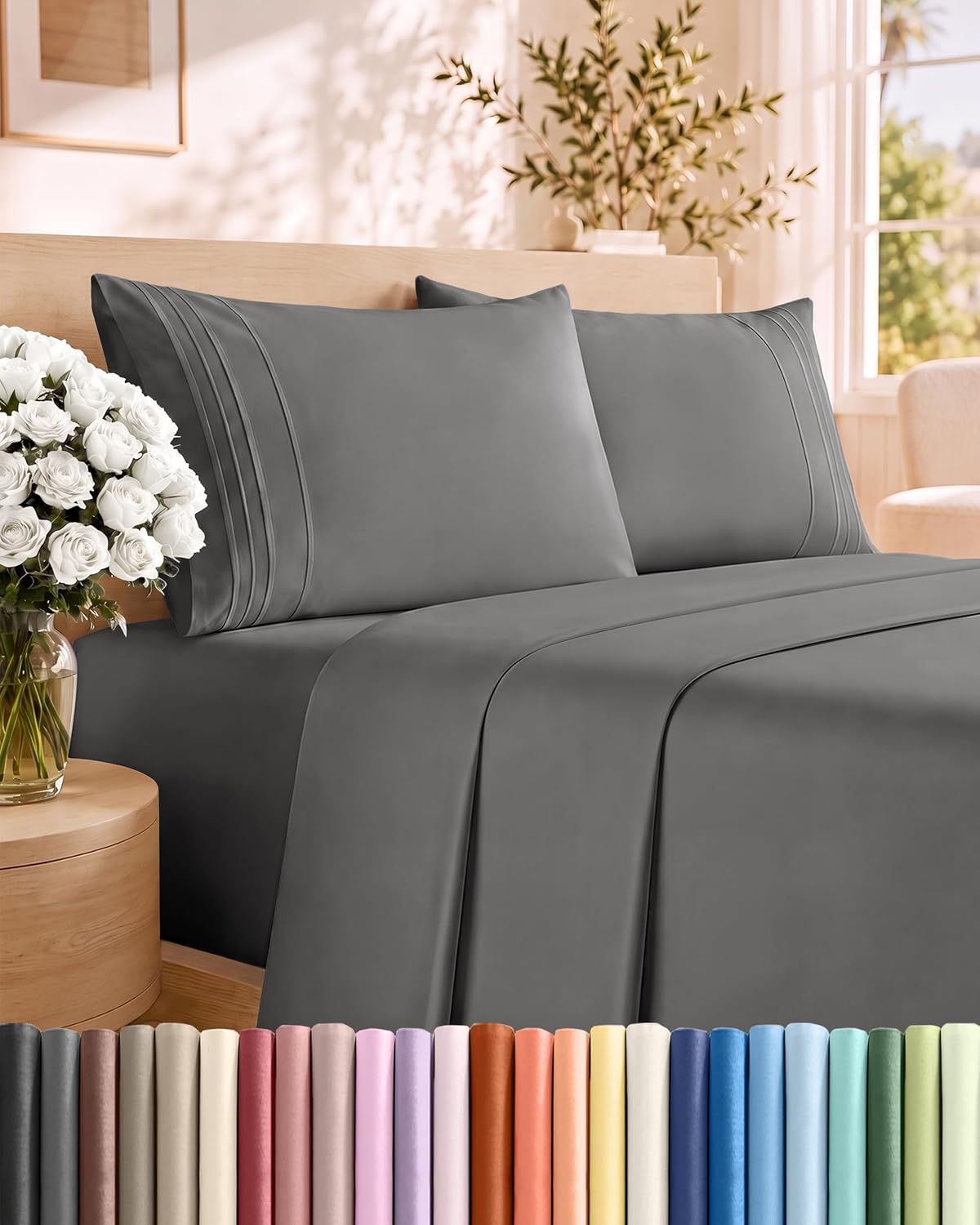
CGK Unlimited
Queen Size 4-Piece Sheet Set — Dark Grey
A soft, double-brushed microfiber 4-piece set with deep pockets for mattresses up to about 16 inches. Available in 10 sizes and dozens of colors.
See product details5. Protect the mattress underneath
A mattress protector is the layer most people skip — and the one that keeps your mattress clean the longest. A waterproof protector blocks spills, sweat and accidents, and you can toss it in the washing machine instead of trying to clean a mattress. Look for one that's quiet (no crinkling) and deep enough for your mattress.

BEDLORE
BEDLORE Waterproof Mattress Protector — Queen, Quilted & Noiseless
Quilted and waterproof with a noiseless layer, and deep pockets that fit mattresses up to 18 inches. Machine washable.
See product details6. Make the bed in the right order
- Mattress protector
- Fitted sheet
- Flat sheet
- Blanket or comforter
- Pillows in pillowcases
Quick checklist before you buy
- Measure your mattress depth, including the topper.
- Pick the matching size — a Queen is 60 × 80 inches.
- Choose your fabric: soft and easy-care (microfiber) or natural fiber (cotton).
- Check the piece count — a 4-piece set has two pillowcases.
- Add a mattress protector underneath.
Sleep well — and save this guide for the next time you shop for bedding.